Workwear is a different job to a one-off design
A single uniform contract is rarely a single file. The same logo has to sew on a polo piqué left chest, a structured cap front, a fleece, maybe a hi-vis softshell and a 300mm jacket back. Each of those is a different size on a different fabric, which means a different stitch file, not the same file scaled up.
Sent to a digitizing service, that's a fee and a wait per version. It's the reason so many shops quote workwear slowly, or sew a left-chest file on a cap and hope. Embify removes that loop: upload the logo once, then generate each placement yourself, as many times as the job needs.
Same logo, every placement, properly re-digitized
Scaling a stitch file is what ruins uniform work. Stitch density doesn't scale with the artwork: blow a left-chest file up to jacket-back size and the fill goes see-through; shrink a back file to a chest and it turns into a solid, thread-breaking brick.
Embify works in real millimetres and re-runs the whole digitizing process at each size, so every placement gets density, underlay and stitch types chosen for that size:
Left chest
Around 90 to 100mm wide. The workwear default.
Cap front
Around 130 × 60mm, sewn centre-out for a curved frame.
Sleeve
Around 85mm, for secondary marks and slogans.
Jacket back
Up to around 280 × 300mm at full density.
The fabric decides the settings, so pick the fabric
Uniform fabrics behave very differently under a needle, and the settings that give a crisp logo on a cotton work shirt will pucker a stretchy performance polo or sink into fleece pile. Embify carries a preset for each, and it changes real numbers, not just a label:
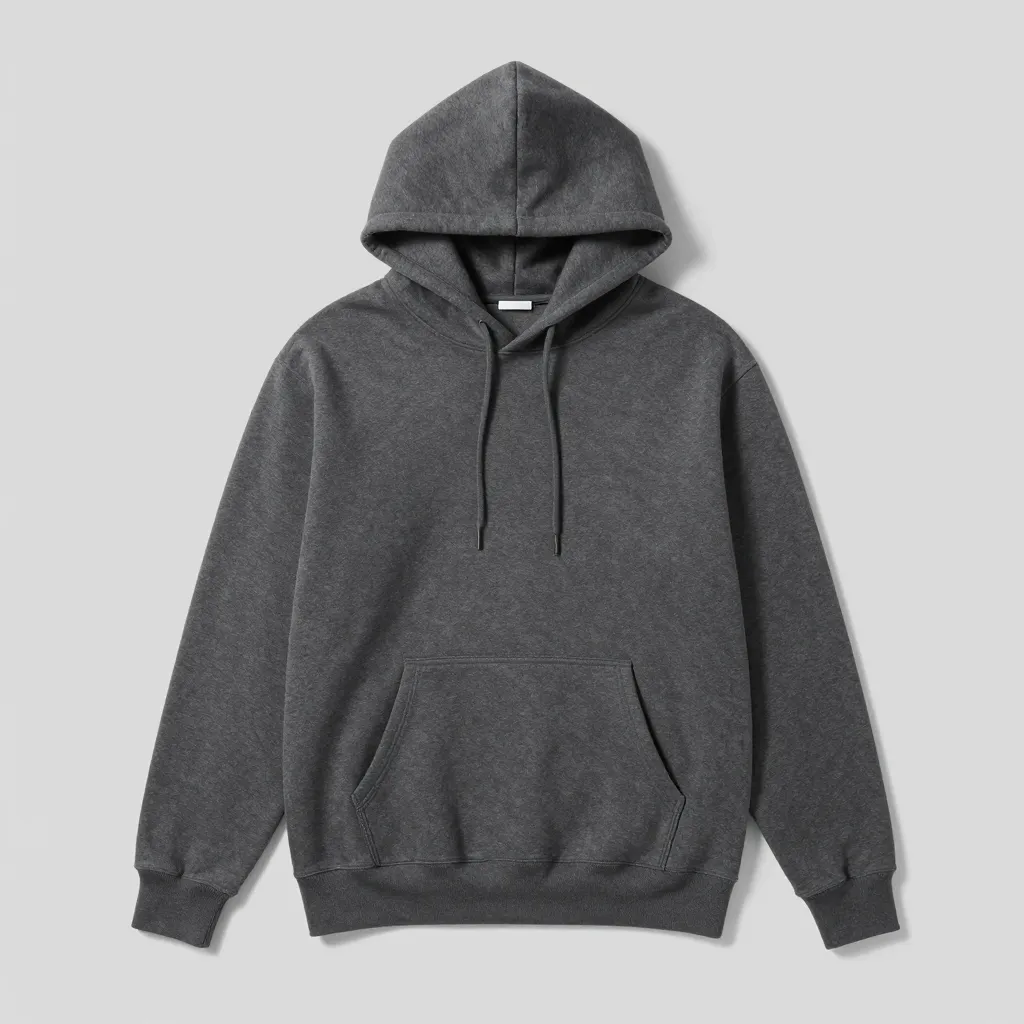

Polo / piqué knit
Extra pull compensation for the stretch.
Hoodie / fleece
Wider satin and a denser fill so stitching sits on the pile instead of sinking in.
Structured cap
Shorter stitches for tight curves, cap-safe density, sewn from the centre outwards to hold registration.
Denim / canvas
Longer stitches so thread doesn't bury in a thick weave.
Performance / stretch
Looser density and high pull compensation to stop puckering.
Built for garments that get worn and washed
Workwear gets industrially laundered, not hand-washed. What survives that is underlay and honest density: a foundation layer that anchors the fabric before the top stitching goes on, and enough coverage that the fill isn't relying on the fabric showing through to look full.
Embify puts underlay in automatically, per shape and per fabric, and its densities were set by sewing real samples and tightening them until the gaps closed, rather than by copying a generic table. We also benchmarked the output against 80 professionally digitized commercial files to check jumps, trims and density land in the same band a production shop would accept.
Fewer stops means more garments per hour
On a uniform run you're sewing the same file dozens or hundreds of times, so every trim and colour change is multiplied by the whole order. Embify plans the stitch order to keep jumps and trims down, hides travel stitches under later fills where it can, and merges near-identical thread shades so the machine stops fewer times. You can also cut the palette in one click when a customer wants a cheaper two-colour version.
What won't work, and it's better to know now
Being straight about this saves you a ruined garment:
- Tiny taglines. Text under roughly 4–5mm tall doesn't sew legibly on any fabric. Embify warns you at your chosen size so you can enlarge it, drop it, or move it to a bigger placement.
- Gradients and photographic art. Thread is solid colour. Soft fades get flattened to a small set of shades, and you'll see exactly how before you download.
- Hairline detail. Fine strokes that look great on screen snap thread at chest size. The readiness check flags them.
The 3D sew-out preview exists precisely so these turn up on your screen instead of on a customer's jacket.
Common questions
What size should a logo be on a work polo?
Left chest is usually 90 to 100mm wide, positioned about 180 to 200mm down from the shoulder seam. Embify works in real millimetres, so you set the exact width and it digitizes for that size.
Can I use the same file for polos and caps?
You shouldn't. A cap front is a different size on a curved, structured surface, so it needs its own digitization. In Embify you re-run the same logo at cap size with the cap fabric preset, which uses shorter stitches, cap-safe density and sews from the centre outwards to hold registration.
Will the embroidery survive industrial laundering?
That comes down to underlay and density, both of which Embify sets automatically per fabric and per shape. It also depends on your thread, stabiliser and machine, which no software controls, so sew a sample before committing a large uniform order.
What about hi-vis and stretchy performance fabric?
Use the performance preset. Stretch fabrics pucker if the fill is too dense, so it uses looser density and high pull compensation. On hi-vis, also keep the design simple: heavy stitching on a lightweight shell is what causes rippling.
Which format do commercial embroidery machines use?
Most commercial machines, including Tajima, Barudan and SWF, use DST. Embify exports DST, plus PES, JEF, EXP and XXX from the same conversion, so you can cover a mixed floor of machines.
How many times can I re-digitize the same logo?
Unlimited on any paid plan. That matters for workwear because a single contract might need five or six versions of one logo, and each one is a fresh digitization rather than a scaled copy.